How to budget biweekly paychecks with a bill calendar
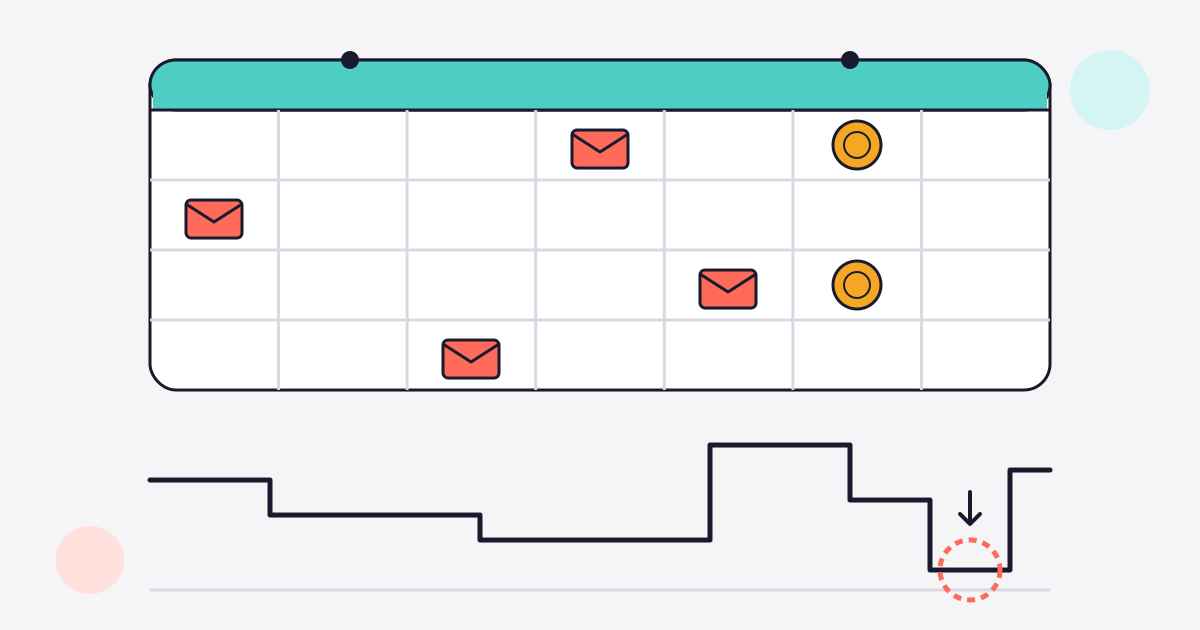
"Payday's Friday. The car payment's Wednesday." If that sounds familiar, here's how to see it coming. Pay that arrives every other week and bills that come due once a month run on two different clocks, so the gap between them moves. That makes it trickier than it looks: a month can come out ahead in total and still dip close to zero for a few days. A bill calendar shows you those days ahead of time. All you need is a pen and paper or a spreadsheet.
1. Write down your paydays for the next few months
Biweekly means every other week, on the same weekday, so the calendar dates drift from month to month. List the actual dates, starting with the next payday and running at least through the next few months. Six months is a good stretch.
Biweekly pay means 26 paydays in most years, which puts three paychecks in two of the months. Some years have 27. Which months get three depends on your schedule, so find yours on the calendar and mark them.
If you're paid twice a month (the 1st and 15th, say) or every week, the same steps work with your own dates. If your income varies, put in the dates you expect and treat the amounts as estimates.
2. Set up a bill calendar with every due date
Put every bill on the day it comes due: rent or mortgage, utilities, phone, insurance, loan payments, and credit card payments. For an autopay, use the date the money is drawn, since that's the day your balance drops.
A credit card's payment due date is the same day of the month every billing cycle, so it's one entry you can repeat down the calendar. Other bills may move, so check each one.
Add the recurring charges too. If you haven't listed those yet, How to find hidden subscriptions walks through building the list. Quarterly and yearly bills go on the calendar as well, which is why it runs months ahead.
3. Add a weekly amount for everyday spending
Groceries, gas, the coffee. Pick one rough number per week, set it from a recent statement, and lean high. It's an estimate, so label it as one on your calendar and swap in the real figure later.
4. Carry a running balance week by week
Start with today's balance in the account your bills come out of. Then go in date order: paydays add, bills subtract, and the weekly amount subtracts at the start of each week.
Count card purchases once, as the card payment on its due date. Counting each swipe and the payment as well would count the same money twice. If your everyday spending goes on the card, leave it out of the weekly amount for the same reason.
5. Find the low point on your monthly calendar
Scan the whole calendar for the lowest balance and the day it lands. Look inside each week, because a bill due the day before payday can take the balance lower than any end-of-week figure shows.
Here's an example. Say you're paid $1,500 every other Friday, on the 13th and the 27th of a 30-day month, and you start the month with $2,200.
| Day | What | Amount | Balance |
|---|---|---|---|
| 1 | Rent | -$1,300 | $900 |
| 1 | Everyday spending, week 1 | -$250 | $650 |
| 8 | Everyday spending, week 2 | -$250 | $400 |
| 8 | Streaming | -$16 | $384 |
| 10 | Car payment | -$300 | $84 |
| 12 | Phone | -$60 | $24 |
| 13 | Paycheck | +$1,500 | $1,524 |
| 15 | Everyday spending, week 3 | -$250 | $1,274 |
| 22 | Everyday spending, week 4 | -$250 | $1,024 |
| 22 | Card payment | -$150 | $874 |
| 25 | Utilities | -$120 | $754 |
| 27 | Paycheck | +$1,500 | $2,254 |
| 29 | Everyday spending, days 29 and 30 | -$50 | $2,204 |
In: $3,000. Out: $2,996. The month comes out $4 ahead, and the balance still bottoms out at $24 on the 12th, the day before payday. Splitting the monthly bills in half and giving each paycheck its share doesn't show that. The dip comes from the order of the dates.
6. Decide what to do before that week
Once you can see the low point, you have time to do something about it. A few things you could try:
- Match bills to the paycheck that covers them. One paycheck could be the one that "covers the car and the phone."
- Hold back part of the earlier paycheck for the stretch before the dip.
- Ask a biller whether it can move a due date.
- Look at the bills that can shrink before the low point. Signs you're paying for subscriptions you don't use is one way to lower an outflow.
- Decide what your third paycheck in a three-paycheck month is for, before it arrives.
It's also worth knowing what happens if the balance does go below zero. The CFPB says that for one-time debit card purchases and ATM withdrawals, a bank can't charge an overdraft fee unless you opted in. Banks can charge overdraft fees for checks and recurring electronic payments even if you didn't opt in, and that includes bills on autopay. A bank may also decline a payment and charge a non-sufficient funds fee, often the same amount as an overdraft fee. A declined payment may bring a returned-item fee from the merchant too.
That's the reason to care about the low point. Your calendar shows it coming, and steps like the ones above give you time to act on it.
7. Roll it forward each payday
On each payday, swap your estimates for what actually happened, add the next two weeks to the end, and look for the next low point. A few minutes a payday keeps the calendar honest. Nice work: that's the whole method.
Where Unspending Spree fits
The method above works with a spreadsheet and some patience. Unspending Spree lets you see your projected cash balance up to six months ahead, bill by bill, and the lowest point it reaches.