How to read your credit card statement
· Updated
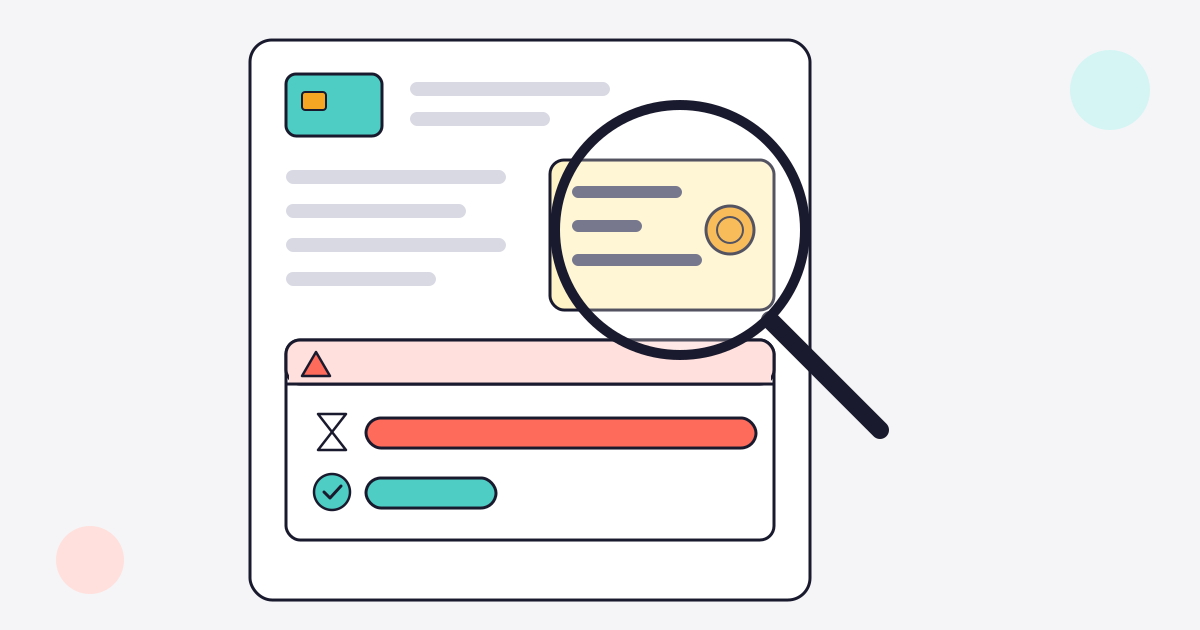
The statement arrives, and your eye lands on one line: Minimum Payment Due. Paying the minimum felt responsible, and it was, until it became the plan. If the whole picture feels overwhelming, this post makes it smaller. By the end you can open your own statement, find the minimum payment, the minimum payment warning box and the APR, and say in plain words what each one means.
It's trickier than it looks. The numbers that matter sit in different boxes, one of them is often on a later page, and the payoff estimate rests on assumptions printed right beside it. To make this concrete, we'll read the regulator's own model statement: Sample G-18(F) in Regulation Z, Appendix G, as published by the CFPB. Every dollar amount and rate in the example comes from that sample. Your statement has its own numbers and may be laid out differently.
1. Find the Payment Information box
For statements from US card issuers, Regulation Z puts the due date on the front of the first page. It also groups the late fee and penalty APR, the ending balance, the minimum payment due and the minimum payment warning together, close to one another. What a late payment can bring is its own post: What happens if you miss a credit card payment.
In the sample, that group is the box headed "Payment Information". Two numbers are worth pointing at: New Balance, $1,784.53, and Minimum Payment Due, $53.00. Next to them sits the Payment Due Date.
2. Read the minimum payment due
The minimum payment due is the smallest payment the card issuer asks for this cycle, by the due date. The amount comes from the card's own minimum payment formula, and Regulation Z's repayment-estimate appendix refers to it that way. The card's terms live in the cardholder agreement, which the CFPB says you can get from the issuer's website or by calling.
In the sample, the consequence of a late payment sits right beside the due date. It reads: "If we do not receive your minimum payment by the date listed above, you may have to pay a late fee of up to $35 and your APRs may be increased up to the Penalty APR of 28.99%." Regulation Z asks for both the fee and the increased rate to be stated near the due date.
Then there's the question of minimum payment versus statement balance. The statement's balance is the amount outstanding on the closing date of the billing cycle, a figure the rule requires the statement to show. Your card's app can show a different balance that includes newer activity. The CFPB explains that a grace period is the period between the end of a billing cycle and the date your payment is due. It also says "most credit cards provide a grace period on purchases." If your card has a grace period and you aren't carrying a balance, paying in full by the due date can avoid interest on new purchases.
The CFPB also says, in its answer about the payoff box: "You do not have to pay any more than the minimum amount shown on your statement. However, the more you pay each month, the less interest you will pay over time." What you pay is your call. The next step shows what the statement itself says about it.
3. Read the minimum payment warning box
Under the payment details, the sample has a box with a bold heading. Regulation Z requires this sentence: "If you make only the minimum payment each period, you will pay more in interest and it will take you longer to pay off your balance."
Below it is a small table. Read it row by row.
- Only the minimum payment: about 10 years, and an estimated $3,284 in all.
- $62 a month: about 3 years, and an estimated $2,232 in all. The statement calls the $1,052 difference "Savings."
In plain words, $62 is $9 a month more than the $53 minimum, and in the sample that changes "10 years" to "3 years." Each total is interest plus principal, and the principal here is the $1,784.53 balance. At the minimum, roughly $1,500 of the $3,284 is interest. At $62, roughly $450 of the $2,232 is. Those are the sample's numbers, there to show how to read the box.
The box also prints a toll-free number for information about credit counseling services. In the sample it appears as a line below the table.
There's a second version of the box. When the minimum payment is less than the interest charged, Regulation Z has the box say you "will never pay off the balance shown on this statement because your payment will be less than the interest charged each month," and it gives a 36-month payment. "Never" is the regulation's word. It describes that statement's balance, and the box shows a payment amount alongside.
4. Know what the estimate assumes
The estimate is a snapshot. It uses the balance on this statement and assumes you make only minimum payments and add nothing new to the balance. The CFPB puts it this way: "These amounts are calculated based on your current balance and do not take into consideration any future purchases."
A few more details help when you read your own:
- The time is shown in months when it's under 2 years, and rounded to whole years otherwise, so "10 years" is a rounded number.
- The rule counts an estimate as accurate if it's within 2 months either way of the appendix's calculation.
- The 36-month row can be missing. The rule doesn't require it when the minimum payment estimate, after rounding, is 3 years or less.
- The whole box can be missing. It's left off after two billing cycles in a row in which the balance was paid in full (or was zero, or was a credit), when the minimum would pay off the entire balance, and on charge cards that require payment in full each cycle.
If you don't see the box on your statement, one of those reasons may be why. To run the same estimate with a payment amount of your own, see How long will it take to pay off your credit card?
5. Find your APR
The APR is often on a later page. In the sample it's in a section called "Interest Charge Calculation," which begins: "Your Annual Percentage Rate (APR) is the annual interest rate on your account."
Regulation Z says each rate is labeled "Annual Percentage Rate", with the type of transaction it applies to, and a variable rate is marked as one. The sample's table has these columns: Type of Balance, Annual Percentage Rate (APR), Balance Subject to Interest Rate, and Interest Charge. Two of its rows:
- Purchases: 14.99% (v), on a balance of $512.14, for an interest charge of $6.31.
- Cash Advances: 21.99% (v), on a balance of $253.50, for an interest charge of $4.58.
The "(v)" stands for "Variable Rate." Purchases and cash advances can carry different rates, and the statement shows the part of the balance that falls in each category.
One more thing about how the APR turns into dollars. The CFPB says many card companies calculate interest daily, using a daily periodic rate, which is generally the APR divided by 360 or 365, depending on the card issuer.
6. See what interest and fees cost this month and this year
Regulation Z has the statement group interest under "Interest Charged" and fees under "Fees", each totaled for the statement period and for the calendar year to date.
In the sample, the interest section lists $6.31 on purchases and $4.58 on cash advances, for a total of $10.89 for the period. A year-to-date box shows total fees and total interest charged for the year, $90.14 and $18.27 in the sample. That box is worth a look once a year, or on your next statement.
Nice work. That's the whole tour: the minimum payment, the warning box, the APR and the totals.
Where Unspending Spree fits
Reading a statement by hand works. Unspending Spree shows credit cards, loans, and balances in one place, with interest rates, minimum payments, and estimated payoff dates tracked without logging into multiple sites. You can link your bank through Plaid with read-only access, or upload a PDF, CSV, or photo. AI reads PDFs and photos: account details, transactions, APR and due dates. You can also forward a statement email with the file attached and it processes automatically.
Every card and loan's due date appears in one place, and on your Google Calendar if you connect it. We estimate when you could be debt-free from the plan you set, and show how a bigger payment moves the date. Calculations are estimates based on your data and current rates. Not financial advice.