When does credit card interest start?
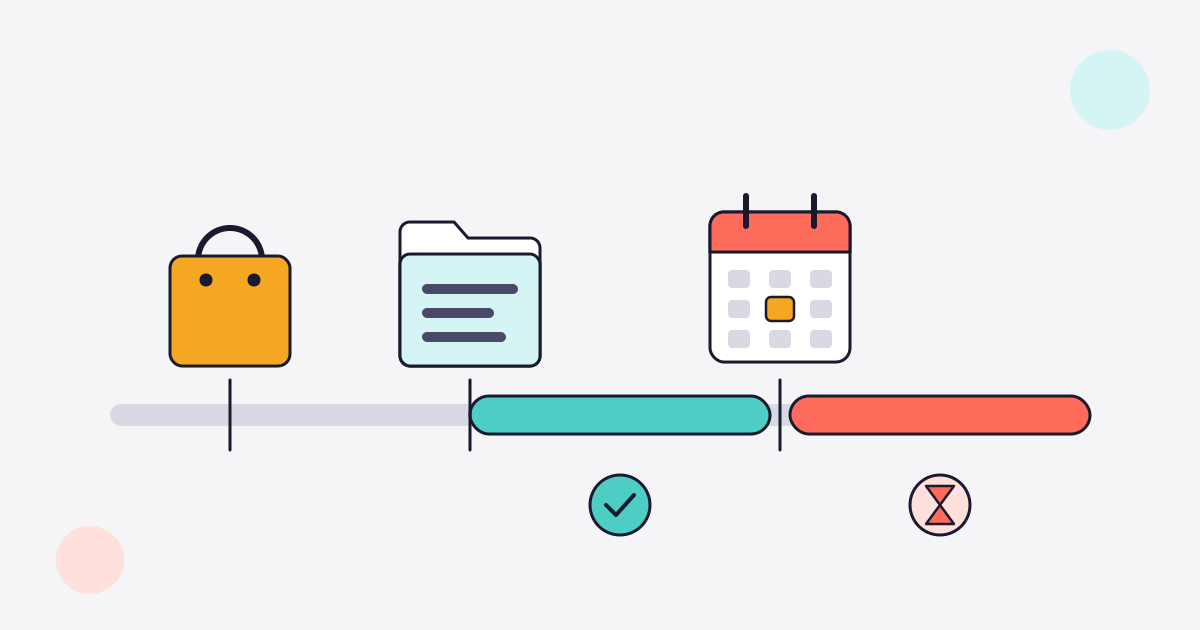
You buy something on a credit card. When does interest start on it? By the end of this post you can answer that for your own card. You'll find two dates on your statement, check whether your card has a grace period, and see what changes once a balance carries over.
It's trickier than it looks. The answer depends on the card's terms and on what you paid last month, along with the purchase date. Two charges made on the same day can be treated differently. Here's how to work it out, one date at a time.
1. Find your closing date and your due date
Two dates on your statement carry the answer. The closing date ends the billing cycle. The balance on the statement is the amount outstanding on that date, a figure Regulation Z requires the statement to show. The payment due date comes after it.
For a credit card, the due date is the same day of the month every billing cycle. Issuers are also required to have procedures that mail or deliver statements at least 21 days before the payment is due. If yours came late, the CFPB suggests contacting the issuer.
If you're not sure where these dates sit on the page, How to read your credit card statement walks through a sample statement box by box.
2. Check whether your card has a grace period
The CFPB has a plain definition of a grace period. It's "the period between the end of a billing cycle and the date your payment is due." That's the stretch between the two dates from step 1.
Card companies aren't required to give a grace period. The same CFPB page says "most credit cards provide a grace period on purchases." Notice the last two words. The grace period it describes is about purchases. A cash advance can follow different terms, and it can carry a different rate from purchases.
To see your card's own terms, look at the cardholder agreement. The CFPB says you can get it from the issuer's website or by calling.
3. See when interest starts if you pay in full
Here's the case where a purchase can carry no interest. If your card has a grace period and you aren't carrying a balance, paying the statement balance in full by the due date can avoid interest on new purchases (CFPB).
Say your statement closes on the 15th and the payment is due on the 10th of the next month. You buy a $200 jacket on the 3rd. It lands on the statement that closes on the 15th. You pay that statement's full balance by the 10th. Nothing was carried over from the month before. In that case, the jacket costs $200 and no interest.
Timing within the cycle changes how long you wait to pay. Buy the same jacket on the 16th instead, and it lands on the next statement. Its due date moves a month later.
4. See when interest starts if you carry a balance
Now say you pay less than the full statement balance by the due date. The CFPB says that when you lose the grace period this way, you're charged interest on the unpaid part and on new purchases from the day each is made.
That changes the jacket example. If you carried a balance into the cycle, interest on a new purchase can start the day you make it. There's no waiting for the due date.
Getting the grace period back can take more than one month. Paying in full some months and not others can lose the grace period for the month you don't pay in full and for the month after (CFPB). If a month went sideways, it happens. The next statements show where you stand.
A missed due date can bring more than interest, like a late fee. What happens if you miss a credit card payment covers those.
5. See how interest adds up once it starts
The CFPB says many credit card companies calculate the interest you owe daily, based on your average daily account balance. The daily rate generally comes from dividing the APR by 360 or 365, depending on the card issuer.
Say you carry $1,000 on a card with an 18% APR, and the issuer divides by 365.
- The daily rate is 18% ÷ 365, about 0.0493% a day.
- One day on $1,000 is about $0.49 of interest.
- Thirty days at that balance is about $14.79.
Those are example figures to show the arithmetic. Your card's rate, method and balance set the real number, and the statement shows it.
6. Put your own dates on a calendar
You can do this in a few minutes with your latest statement.
- Write down the closing date and the payment due date.
- Check the statement balance and whether last month's balance was paid in full.
- Look in the cardholder agreement for whether the card has a grace period on purchases.
With those three answers, you can tell when interest can start on your next purchase. Nice work. That's the whole timeline.
Where Unspending Spree fits
Unspending Spree shows credit cards, loans, and balances in one place, with interest rates, minimum payments, and estimated payoff dates tracked without logging into multiple sites. AI reads PDFs and photos: account details, transactions, APR and due dates.
Every card and loan's due date appears in one place, and on your Google Calendar if you connect it. Calculations are estimates based on your data and current rates. Not financial advice.