What is an interest charge on a credit card?
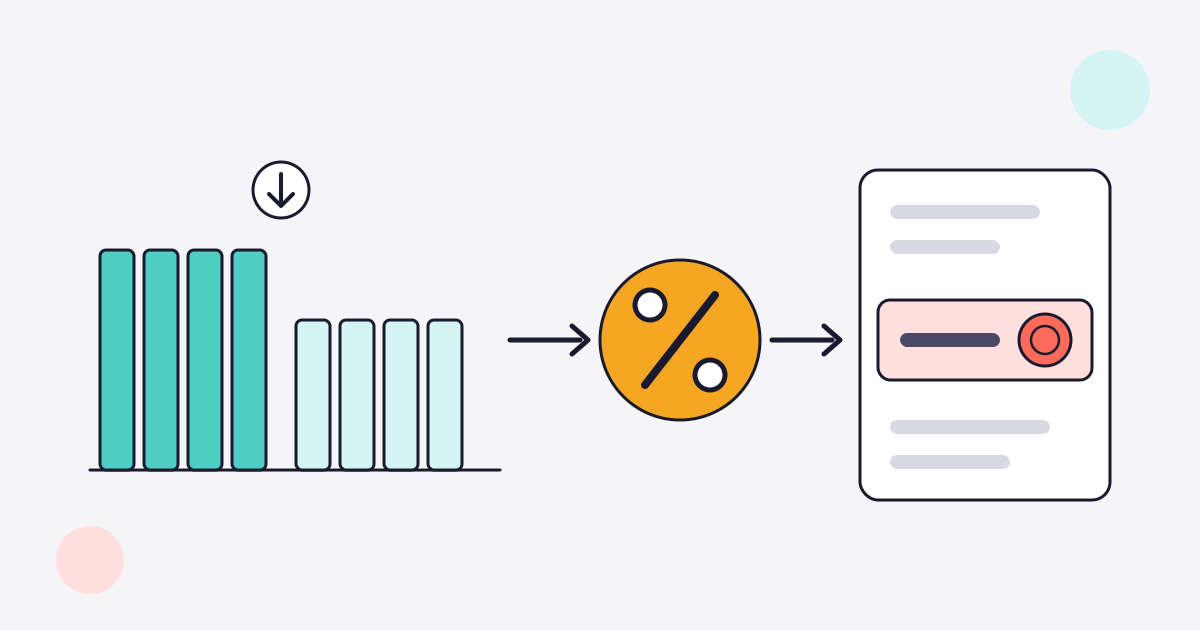
An interest charge is the dollar amount your card company adds for carrying a balance. By the end of this post you can find it on your statement, see which rate it came from, and work out roughly how it was figured.
It's trickier than it looks. The rate on your card is yearly, but interest is often figured day by day. The balance it's figured on moves when a purchase or payment posts. So the charge depends on when things happened during the month as well as how much you owed. Here's how to read it.
1. Find the interest charge on your statement
Regulation Z has the statement group interest under "Interest Charged" and fees under "Fees." Each is totaled for the statement period and for the calendar year to date.
The interest can be split by type of balance. Purchases and cash advances can carry different rates. The statement shows each category with a different APR and the amount of the balance that falls in each.
In the CFPB's sample statement, that's a $6.31 charge on purchases and $4.58 on cash advances. How to read your credit card statement walks through that sample box by box.
2. Find the APR behind it
The interest rate on a card is typically stated as a yearly rate, called the annual percentage rate (APR). On the statement, each rate is labeled "Annual Percentage Rate" along with the type of transaction it applies to.
Say your card has an 18% APR. That's a yearly rate. The card company often breaks it into a daily rate, and the daily rate is what meets your balance.
3. See how a yearly rate becomes a daily charge
The CFPB says many credit card companies calculate the interest you owe daily, based on your average daily account balance.
The daily rate is called the daily periodic rate. It generally comes from dividing the APR by 360 or 365, depending on the card issuer. At 18% and 365, that's about 0.0493% a day.
An average daily balance is what it sounds like. Add up the balance at the end of each day in the billing cycle. Then divide by the number of days in the cycle. Put the pieces together and you get an estimate:
Interest ≈ average daily balance × daily periodic rate × days in the cycle
4. Work an example
Say you have a 30-day billing cycle, an 18% APR, and an issuer that divides by 365. You start the cycle owing $2,000. A $500 payment posts on day 11.
- Days 1 to 10: $2,000 a day, for a total of $20,000.
- Days 11 to 30: $1,500 a day, for a total of $30,000.
- Average daily balance: $50,000 ÷ 30 = about $1,666.67.
- Interest: $1,666.67 × 0.0493% × 30 = about $24.66.
Now say the same $500 payment posts on day 21 instead.
- Days 1 to 20: $2,000 a day, for a total of $40,000.
- Days 21 to 30: $1,500 a day, for a total of $15,000.
- Average daily balance: $55,000 ÷ 30 = about $1,833.33.
- Interest: about $27.12.
Same balance, same payment, same rate. The earlier payment left a lower balance for more days, and the interest came out about $2.46 lower. Those are example figures, there to show how the formula behaves.
5. Check whether the charge applies
Whether purchases get an interest charge depends on the grace period. The CFPB describes a grace period as "the period between the end of a billing cycle and the date your payment is due." Card companies aren't required to offer one. If your card has one and you aren't carrying a balance, paying the statement balance in full by the due date can avoid interest on new purchases.
Once a balance carries over, the CFPB says you're charged interest on the unpaid part and on new purchases from the day each is made. That's when the daily math from step 3 starts to run.
6. Sanity-check your own charge
You can check the figure with three numbers from your statement: the APR, the number of days in the billing cycle, and the balance subject to interest. Some statements print that balance next to each rate, as the CFPB's sample does.
Run the formula from step 3. If your answer is close to the charge on the statement, the math lines up. A small gap is expected. Issuers divide by 360 or 365, and the balance changes on the days things post.
A gap you can't explain might have a few causes:
- A cash advance, which can carry a different rate.
- New purchases made while carrying a balance, which can be charged interest from the day each is made.
- A payment that posted later than you expected, which keeps the balance higher for more days.
If none of those fit, call the number on your card and ask the issuer to walk you through how the charge was figured. Nice work. That's the interest charge, found, traced to its rate and checked.
Where Unspending Spree fits
Unspending Spree shows credit cards, loans, and balances in one place, with interest rates, minimum payments, and estimated payoff dates tracked without logging into multiple sites. AI reads PDFs and photos: account details, transactions, APR and due dates.
We estimate when you could be debt-free from the plan you set, and show how a bigger payment moves the date. Calculations are estimates based on your data and current rates. Not financial advice.